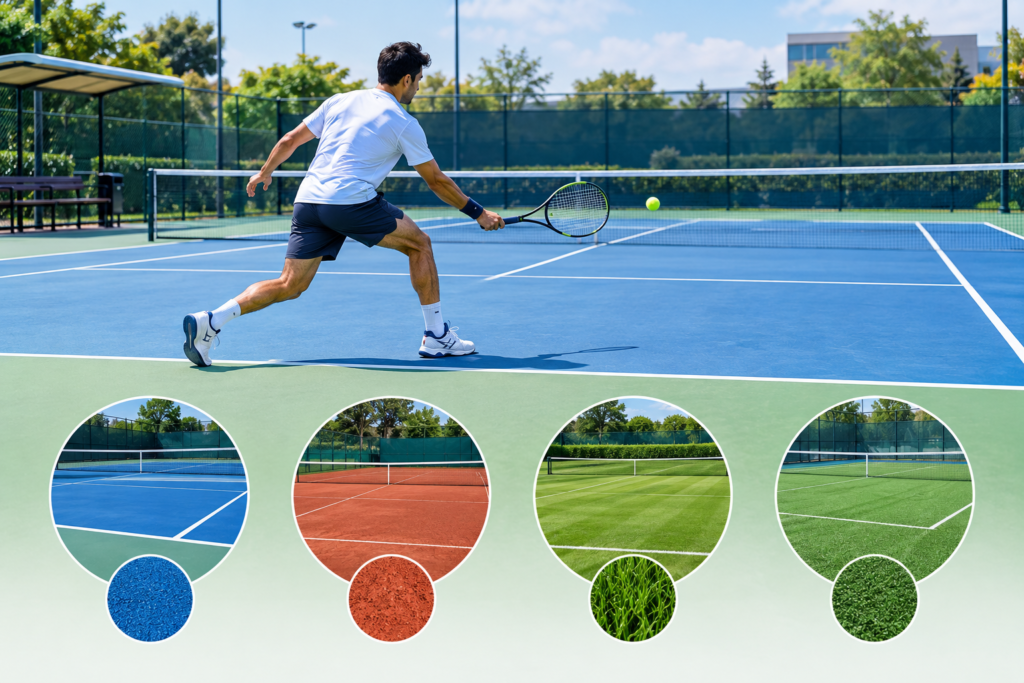
The type of tennis court surface will change the speed of the ball, the bounce height, the type of movement, the maintenance requirements, and the cost of the court over time.
The best choice will depend on where the court is located, how many people play on it, and who plays it.
Before building, review the surface options available for schools, clubs, academies, homes, and pro sites to avoid costly swaps later in construction.
What Are the Main Types of Tennis Court Surfaces?
Each surface has a different “feel” on the court. Some speed up the points, while others slow the ball or let players slide more. Weather, care needs, and how the court is used matter as much as playing style.
Acrylic Hard Court
Acrylic hard courts have a textured acrylic top coat and are installed on concrete or asphalt. They bounce reliably, hold up well, and require less maintenance. Cushioned acrylic setups add soft layers so players feel better on their feet. For busy academies, schools, clubs, and outdoor spots, acrylic often hits a good mix of play quality and toughness.
Clay Court
Clay courts slow down the ball and bounce it up higher for extra time to play long points. They are also softer underfoot than most hard courts. But clay needs steady watering, rolling, brushing, line work, and weather checks, so it works best where you can provide that regular care.
Natural Grass Court
Grass makes for a quicker game with a lower bounce. It offers a unique feel but requires heavy mowing, watering, repairs, and surface maintenance. For most schools, home projects, and public spots, the maintenance load makes it less practical than man-made options.
Synthetic Grass Court
Synthetic grass looks like real grass but needs less care. Sand-filled setups can feel easy to move on and may fit fun or shared-use spots. Still check drainage, pile details, fill material, and tennis fit instead of choosing fake turf for looks alone.
Which Tennis Court Surface Is Best for Your Facility?
No one surface fits every job. Match your choice to expected play, local weather, the care you can handle, your budget, and what players need.
For High-Usage and Outdoor Courts
Acrylic surfaces make sense when you want lasting courts, consistent play, and manageable maintenance. Good base work, drainage, layer details, and skilled installation still matter for lasting results.
For Greater Player Comfort
Cushioned acrylic or the right synthetic setups can soak up more impact than a plain hard court. The best setup depends on skill level and how often the court sees action.
For Traditional Playing Characteristics
Clay and natural grass still work when you want that classic feel and the site can handle the extra care they need.
Conclusion
The most important aspect of a tennis court surface is that it suits the site, not just what is popular. Each surface type offers a unique playing experience and maintenance routine, including acrylic, clay, natural grass, and synthetic grass.
Asian Flooring India supplies and installs indoor and outdoor sports surfaces, including synthetic tennis court flooring. We offer acrylic and synthetic tennis surfaces plus full sports-court building work.
For schools, clubs, academies, home projects, or sports sites planning a new court, we can help you choose and install a system that fits the ground, the use, and the play needs.