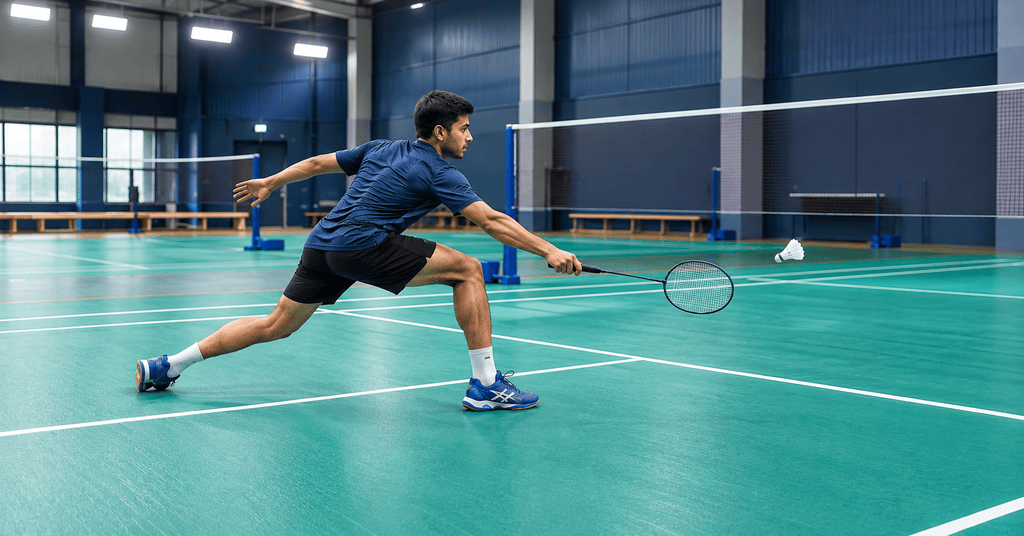
The type of badminton court flooring affects how well players grip the surface, move around, absorb landing shock, and keep the surface in good condition. It may look perfect on the surface but still perform poorly if it is too hard, slippery, or difficult to repair.
You will have to consider the materials as well as the frequency of ground use, skill levels of players, and the level of maintenance required. The right floor is not only about the finished look; it’s also a performance decision.
Which Badminton Court Flooring Materials Should You Consider?
Different flooring types behave differently as players quickly step into the ground, slam on the brakes, lunge, and then land hard again and again. Get clear on what every option actually brings to the court before you spend any money.
Wooden Sports Flooring
People install wooden floors in top indoor badminton halls because the top layer stays firm while the layer underneath softens the impact. Maple and teak are common in sports floors. A well-built wooden setup provides solid footing, feels comfortable underfoot, and lasts for years, but it requires experienced fitters and a stable indoor climate.
PVC or Vinyl Sports Flooring
Most PVC sports floors come in rolls ready for indoor courts. The top has a textured surface for grip, while the bottom is made of a soft material that absorbs impact as players move. Cleaning remains easy and is suitable for academies, schools, clubs, and halls with more than one sport. Check the thickness, backing, and whether the product is meant for badminton before you decide.
Synthetic Court Flooring
Teams often choose synthetic flooring for a hard, easy-to-clean surface or one suitable for a variety of activities. Some products are suitable for indoor use, while others are suitable for outdoor use. Check slip resistance, cushion, weather resistance, and whether the manufacturer made it for badminton or for all-purpose synthetic sports surfaces.
What Should Buyers Check Before Selecting a Flooring System?
The material itself doesn’t determine how good the court turns out. The base beneath it, the cushioning, the fit, the finish, and how much the court is used all affect the final result.
Player Safety and Shock Absorption
Badminton involves constant jumping, lunging, and quick changes of direction. You want grip you can trust without the floor feeling like concrete. Floors with cushioning or spring systems soften impacts, which matters most on courts that see heavy training every week.
Indoor or Outdoor Application
Wood and PVC floors belong in steady indoor spaces. Outdoor courts need surfaces built to face rain, sun, and proper water run-off. Using the wrong material for the location can reduce performance and shorten service life.
Maintenance and Life-Cycle Cost
Don’t settle for the first price tag. Ask about its cleaning method, when it needs refinishing, what repairs entail, how it’s protected from dampness, whether parts can be replaced, and how many years it may last. A low-cost floor may cost more if it requires frequent repairs or maintenance or if it must be replaced early in its life.
Installation and Sports Standards
A good floor will be a disappointment if the subfloor isn’t level or the installation is rushed. Before you sign off, ask the crew how they prepare the subfloor, mark the lines, handle expansion, build in the cushioning, and whether the system has the appropriate sports-floor certificates.
Conclusion
The type of badminton court flooring depends on the venue, the level of play, the frequency of use, maintenance capabilities, and cost. Wooden, PVC, and synthetic floors each offer benefits, but every aspect of the build matters as much as the floor finish.
Asian Flooring supplies indoor and outdoor sports surfaces along with fitting and upkeep services. Our badminton options cover wooden flooring, PVC/synthetic flooring, and Air-Cush wooden systems.
Anyone planning a new court or updating an old one can talk to Asian Flooring to get a flooring setup that fits their space and how people play there.